



Keeping It Cool: Frost Methane Joins REV
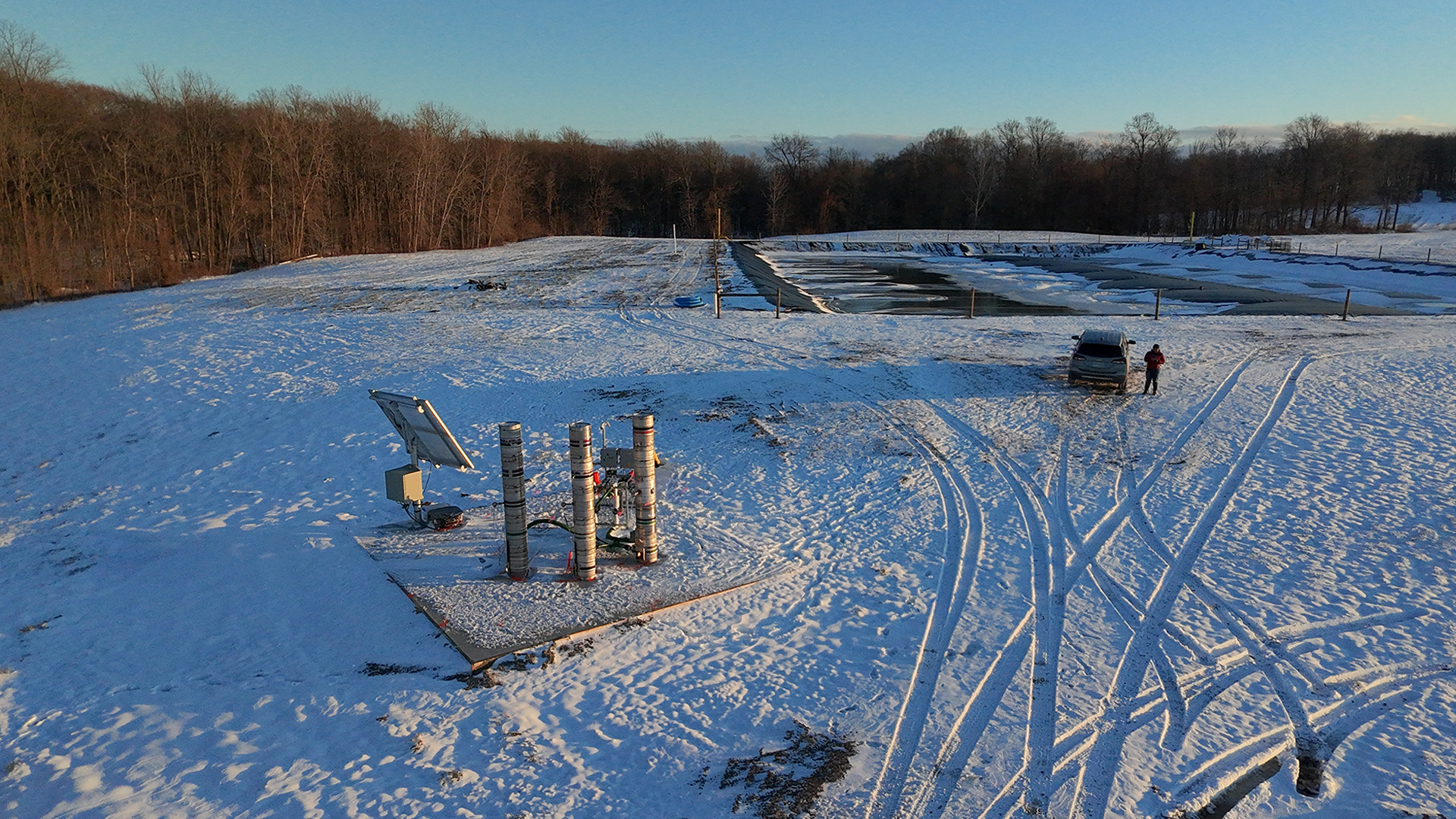
Frost Methane, founded in 2019 by Olya Irzak, partners with livestock farmers to neutralize methane from manure ponds, earning carbon credit revenue, preventing water ingress, and eliminating smells.
What is your “origin story”?
When I got into climate work, I thought that my impact was likely to be in the place where “size of the problem” divided by the “number of people working on it” was most advantageous. Methane jumped out right away. Why did we have 20% of climate change attributed to methane, but only 2% of climate finance going into it? And most of that finance was for detection, not for mitigation. After much research, I found a hole in the ability for medium-sized sources to participate in the carbon market, and where the missing piece was automation – good thing I’m a computer scientist!
With a budget from my bank account, some friends, and Professor Walter Anthony from the University of Alaska at Fairbanks, we headed out to the Arctic to tackle our first source – concentrated methane from the permafrost (and later pivoted to manure ponds).
What customer need is your company attempting to address?
For Farmers: the ability to mitigate their emissions and monetize the results without increasing on-farm labor.
For Carbon Market Purchasers: High-quality carbon offsets at reasonable prices with significant co-benefits.
Do you have any recent company milestones or accomplishments you would like to share?
Frost Methane has mitigated more greenhouse gases (GHG) than all the direct air capture (DAC) companies combined, with less than 1/1000 of the funding.
Where do you envision your company a year from now?
A year from now (2026), we expect to have 9 projects installed, operating, and mitigating 59,000 tonnes of CO2e/ year – earning significant revenue for our partner farmers and providing co-benefits such as air quality, fertilizer, and reduced hauling costs.
In 5 years, we envision a significant scale-up, mitigating 1 Megatonne of CO2e/ year in multiple countries.